
Ever thought about how a few reps might help you feel stronger every day? Resistance training uses weights or resistance bands to help keep your muscles firm. As we get older, our muscles naturally slow down, and everyday tasks can feel more difficult.
Regular workouts can give you that satisfying boost, making daily movements feel easier. Research tells us that adding these exercises to your routine may help fight muscle loss, known as sarcopenia, so you can stay active and enjoy life.
Combat Sarcopenia with Resistance Training

Sarcopenia is a condition where you slowly lose muscle as you age. After 30, adults can lose around 3–8% of their muscle every ten years, and it spikes up to 15% past 60. Many people over 60 struggle with everyday tasks like carrying groceries or climbing stairs because of it.
Resistance training is a tried-and-true way to fight back. When you work out with weights or resistance bands, you help maintain and even build your muscles. Studies tell us that regular sessions can add 1–2% muscle each month and boost your strength by 30–40% in just a few months. Ever felt like you could lift heavier groceries after a few weeks of lifting? That’s what these workouts can do for you. They don’t just build muscle; they also help balance your blood sugar, which keeps your energy steady and cuts down the risk of insulin resistance.
By adding resistance exercises to your routine, you protect your muscles for everyday life. These workouts focus on making you stronger so daily tasks become easier. With regular practice, you can really improve how you feel and move, making your daily routine smoother and life more enjoyable as you get older.
Evidence-Based Strength Protocols for Aging Adults

Back in 1973, researchers discovered how our muscles change as we age. They found that muscles tend to lose mass and strength over time, which is why targeted resistance training is so important. This early insight paved the way for today’s workouts that focus on rebuilding muscle to help you move better every day. With these plans, older adults can work out safely and effectively to improve their strength and mobility.
A smart plan is to do strength training two or three times each week. In each workout, try for 8 to 12 reps of each exercise, doing 2 to 3 sets at about 60–80% of the maximum weight you can lift once (known as your one-rep max or 1RM). Think about moves like sit-to-stand squats, modified push-ups, dumbbell rows, and standing calf raises. These exercises, which you can do with simple tools like dumbbells or resistance bands, help target and rebuild your muscles safely.
Remember, progression is key. Every week, try increasing the weight by about 5% to 10%. This steady step-up challenges your muscles while keeping your progress on track. Not only does this approach build muscle, but it also boosts your confidence to handle everyday tasks more easily.
Designing At-Home Strength Routines to Counter Muscle Loss

If you’re looking to keep your muscles strong as you age, a home workout can be a real game-changer. Start by warming up for about 5 minutes, march in place and do some gentle dynamic stretches to get your body ready.
Then, pick a few exercises you can do three times a week, leaving a day in between so your muscles have time to bounce back. Try this simple routine:
- Bodyweight squats
- Wall push-ups
- Resistance-band rows (using a stretchy band to pull against)
- Chair stands
These moves hit the big muscle groups and are easy to adjust. If an exercise feels too hard or makes you wobbly, go for a smaller version or use a chair or wall to steady yourself.
Once you finish your workout, cool down with 5 minutes of light walking and some static stretches. This helps your muscles settle and keeps you feeling relaxed. Stick with it and gradually ramp up the challenge as you get stronger. In short, a steady routine like this can make daily tasks easier, boost your energy, and build your confidence every day.
Ensuring Safety and Recovery in Sarcopenia Training Programs

Before you jump into any resistance workout, have a quick chat with a physiotherapist. This way, you can talk about your unique needs and sort out issues like joint strain or muscle soreness. A personalized plan works wonders, it helps keep you safe, prevents falls or injuries, and makes mobility drills more effective. Think of it as setting the perfect stage for a workout that lifts your confidence while lowering risks.
Try adding balance and stability helpers like the Balance Pad, Twist Disk, or ToePro platform to your routine. These tools give you extra support and guide your muscles into action in a balanced way. Also, a tidy workout space, the right shoes, and staying hydrated all add up to a safe and focused exercise session.
After your workout, ease into recovery. Spend 5–10 minutes doing light walking or gentle stretches, imagine a brisk walk that loosens tight muscles and clears your head for the next round. This simple recovery routine not only soothes muscle aches but also keeps you ready to go again. Stay safe and keep moving forward.
Sample 8-Week 70+ Lifting Schedule for Muscle Maintenance
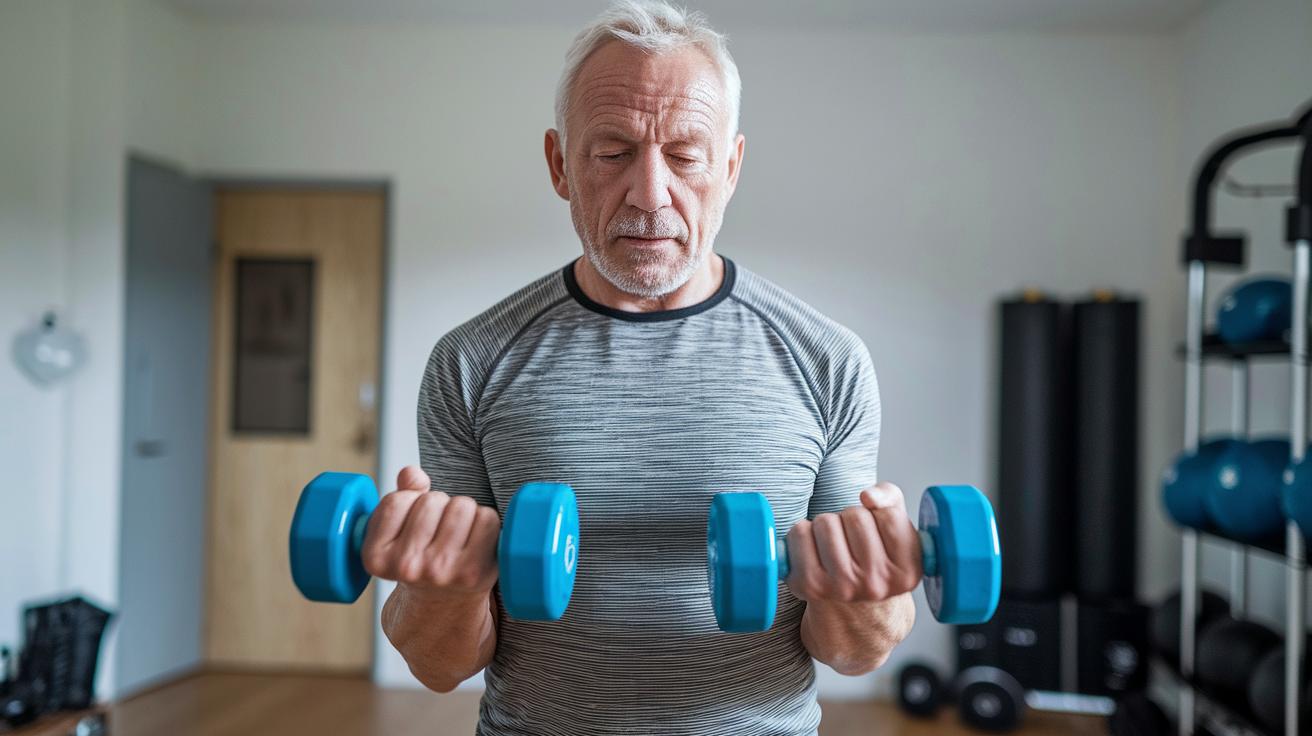
If you're over 70 and want to keep your muscles strong, this eight-week lifting plan is just what you need. It’s built on three workouts a week that alternate between two types of sessions so you steadily build strength and feel great. In Session A, you’ll work on squats, dumbbell rows, and chest presses. These moves help both your lower body and upper body get stronger. Session B focuses on deadlifts, overhead presses, and standing calf raises, targeting your back, shoulders, and legs. Each exercise is done for 3 sets of 8-12 reps, and you’ll give your muscles about 48 hours of rest in between workouts so they have plenty of time to recover and grow.
Imagine stacking building blocks, you start with lighter weights and then add a little more each week. By increasing the weight by around 5% each week, you could see your strength go up by 30-40% over two months. This steady progress not only makes everyday tasks easier but also helps improve your overall mobility. Just be sure to listen to your body and make adjustments if any exercise feels too challenging.
Below is a simple schedule that shows which session you’ll follow each week. Just pick Session A or Session B as indicated, and you’re all set to enjoy the benefits of regular resistance training and better muscle maintenance.
| Week | Session A | Session B |
|---|---|---|
| 1 | Squats, Dumbbell Rows, Chest Press | Deadlifts, Overhead Press, Standing Calf Raises |
| 2 | Squats, Dumbbell Rows, Chest Press | Deadlifts, Overhead Press, Standing Calf Raises |
| 3 | Squats, Dumbbell Rows, Chest Press | Deadlifts, Overhead Press, Standing Calf Raises |
| 4 | Squats, Dumbbell Rows, Chest Press | Deadlifts, Overhead Press, Standing Calf Raises |
| 5 | Squats, Dumbbell Rows, Chest Press | Deadlifts, Overhead Press, Standing Calf Raises |
| 6 | Squats, Dumbbell Rows, Chest Press | Deadlifts, Overhead Press, Standing Calf Raises |
| 7 | Squats, Dumbbell Rows, Chest Press | Deadlifts, Overhead Press, Standing Calf Raises |
| 8 | Squats, Dumbbell Rows, Chest Press | Deadlifts, Overhead Press, Standing Calf Raises |
Tracking Progress and Adjusting Resistance Training Intensity

Keeping a record of your workouts is a great way to see how your strength grows over time. Write down simple details like the weight or resistance you use, the number of reps you complete, and how hard the exercise feels (that’s your rate of perceived exertion, or RPE, which tells you how challenging the workout is). This approach makes it easy to understand how much your muscles are working.
Every month, try adding tests that check your muscle mass, like using a bioimpedance scale, and quick strength retests. These tests give you clear numbers that help you decide when and how to change your routine. Ever notice that a small shift can lead to big improvements? This data is your guide for making workouts even better.
When you see your performance going 10% above your goal, it’s a good sign to bump up the weight by about 5–10%. Writing these details in a simple journal or spreadsheet keeps things organized and consistent. This practical, number-driven method helps keep your training fresh and effective, making sure you keep building muscle and challenging yourself with every session.
Integrating Advanced Modalities for Enhanced Muscle Activation

Advanced equipment can really shake up your resistance training routine. Take the Triple Stick BFR Strap, for example. It gently restricts blood flow so you can build muscle using lighter weights. This tool is built with your safety in mind, which is why it’s smart to try it under a professional’s guidance. One coach even said that using the strap gave her client a steady burn without the usual heavy strain, it felt like a well-controlled upgrade to their workout.
Another fun twist is adding a little extra stability to your routine. Tools like the Two-to-One Ankle Rockboard and Twist Disk help you work on balance while boosting muscle strength. They train your body to hold a secure stance during your exercises. Imagine the Twist Disk as that unexpected core boost that sneaks up on you, turning your workout into a fun challenge.
There’s more to a great session than just lifting and balancing. Recovery and tracking your progress are just as important. Devices such as the Peanut Home Massager help ease muscle tension, while the Toe/Hip Strength Dynamometer shows you the exact load you should work with. These tools make your workout both safe and effective. And remember, having a professional around to guide you ensures you steer clear of any unwanted issues when trying out new equipment.
Final Words
In the action, you learned smart fitness tips to build strength and keep your muscles active. The post covered step-by-step exercises, 8-week lifting schedules, and safety strategies that make workouts clear and doable. We've shown how resistance training for sarcopenia can support muscle strength and boost mobility. With practical at-home routines and evidence-based plans, you can fine-tune your routine for better health and confidence. Keep pushing forward, enjoy every rep, and celebrate the gains along the way.
FAQ
What is sarcopenia and how do exercise guidelines address it?
The term sarcopenia refers to age-related muscle loss. Exercise guidelines, especially resistance training, help slow the loss, boost strength, and improve mobility, making workouts crucial as we age.
Can resistance training prevent or reverse sarcopenia?
Resistance training can slow and even partially reverse sarcopenia. Regular resistance workouts boost muscle strength and mass, reducing fall risk and improving everyday function for older individuals.
What are the best resistance exercises for treating sarcopenia in seniors?
The best exercises include squats, modified push-ups, dumbbell rows, and calf raises. These moves use progressive overload with proper technique, aiding muscle growth and overall strength improvement.
Is resistance training safe for seniors and how should it be prescribed?
Resistance training is safe for seniors when done correctly. A typical plan involves 2–3 sessions weekly with 8–12 reps at moderate intensity, gradual load increases, and pre-exercise screening to minimize risks.