Ever notice how just a few smart bicep moves can really boost your arm strength? This post lays out an easy routine that mixes classic bicep exercises with brief warm-ups and timely breaks. We focus on moves that challenge your muscles safely while keeping your workout fun and engaging. Instead of doing endless reps, you work smart and use good form to build strong, bold arms. Let’s jump in and see how a few focused sets can power up your strength.
Structured Bicep Workout Routine for All Levels
When planning your bicep day, pick 2 to 4 moves that really target your biceps, and why not add some back or other upper body exercises to keep things interesting? For each move, go for 3 to 4 sets of 8 to 12 reps. For instance, you might say, "I did three sets of 10 barbell curls and then switched to three sets of 12 dumbbell hammer curls to change up the routine."
Start with a couple of light warm-up sets using only about half the weight you plan to work with. This helps get your muscles and joints ready without wearing you out. Always choose a weight that challenges you so much that the very last rep nearly knocks you out of your comfort zone, it’s that feeling that tells you you’re really pushing forward.
Take a break of about 60 to 90 seconds between sets. This downtime gives your muscles a chance to recharge, balancing muscle growth with endurance. If you’re just beginning, try to reach near muscle fatigue on your final rep without overdoing it. Remember, slow and steady wins the race.
Aim to work your biceps twice a week, allowing 48 to 72 hours for recovery between sessions. This routine lets your muscles rebuild and get stronger without overtaxing them. Plus, focusing on correct form not only helps prevent injuries but also makes sure you’re getting the most out of each rep. Stick with it, and you’ll be building strong, confident arms in no time.
Bicep Workout Routine: Build Bold Arm Strength

Barbell Bicep Curls
Start by standing with your feet about shoulder-width apart to keep your body steady. Grab the barbell with your palms facing up and tuck your elbows close to your sides. Slowly lift the barbell from your arms' length until your biceps feel the squeeze. Picture your elbows as the hinges of a door, guiding the movement with control. This move not only builds muscle but also helps improve how your arms work together.
Dumbbell Hammer Curls
Hold a dumbbell in each hand with your palms facing each other. This neutral grip targets the muscles on the side of your upper arm. Stand tall and lower the weights slowly, keeping your movements steady without any swinging. Think of it like slowly releasing a deep breath, letting your muscles work hard on the way down.
Preacher Curls
Adjust the bench so the pad rests just below your chest. Sit in a way that your upper arms stay in firm contact with the pad. Lift the weight slowly without using any momentum, imagine each rep like the steady tick of a clock. This strict form really makes your biceps do most of the work, building your strength step by step.
High Cable Bicep Curls
Attach a stirrup handle to the highest setting on the cable machine. Step back and keep your wrists straight as you perform each curl. Focus on squeezing your bicep at the top of every movement, much like a conductor hitting the final, impactful note of a song. Keeping your motion controlled helps maximize muscle activation for a satisfying burn.
Progression Tips and Routine Variations in Bicep Training
Let’s keep it simple at the start. For the first month, try two workout sessions each week, doing 3 sets of 8–10 reps. Think of every session as a building block, you’re laying a strong foundation. For instance, you might say, "I finished all 3 sets of curls without any extra strain," which means you’re making safe progress without overdoing it.
Then, as you move into weeks 5–8, bump it up a bit. Aim for three sessions a week and perform 4 sets of 8–12 reps. This is a great time to add drop sets, which are like giving extra fuel to your workout when your arms call for it, almost like switching your workout into a higher gear.
If you’re ready for the next level, starting from week 9 and beyond, plan for 3–4 sessions per week with 4–5 sets of 6–10 reps. Here, try incorporating supersets or slow negatives (which means lowering weights slowly for more control). Ever notice how a slow eccentric move can really make your muscles feel the burn? That’s where the magic happens.
| Level | Sessions/Week | Sets × Reps |
|---|---|---|
| Beginner | 2 | 3×8–10 |
| Intermediate | 3 | 4×8–12 with drop sets |
| Advanced | 3–4 | 4–5×6–10 with supersets and slow negatives |
Bicep Workout Routine at Home vs Gym
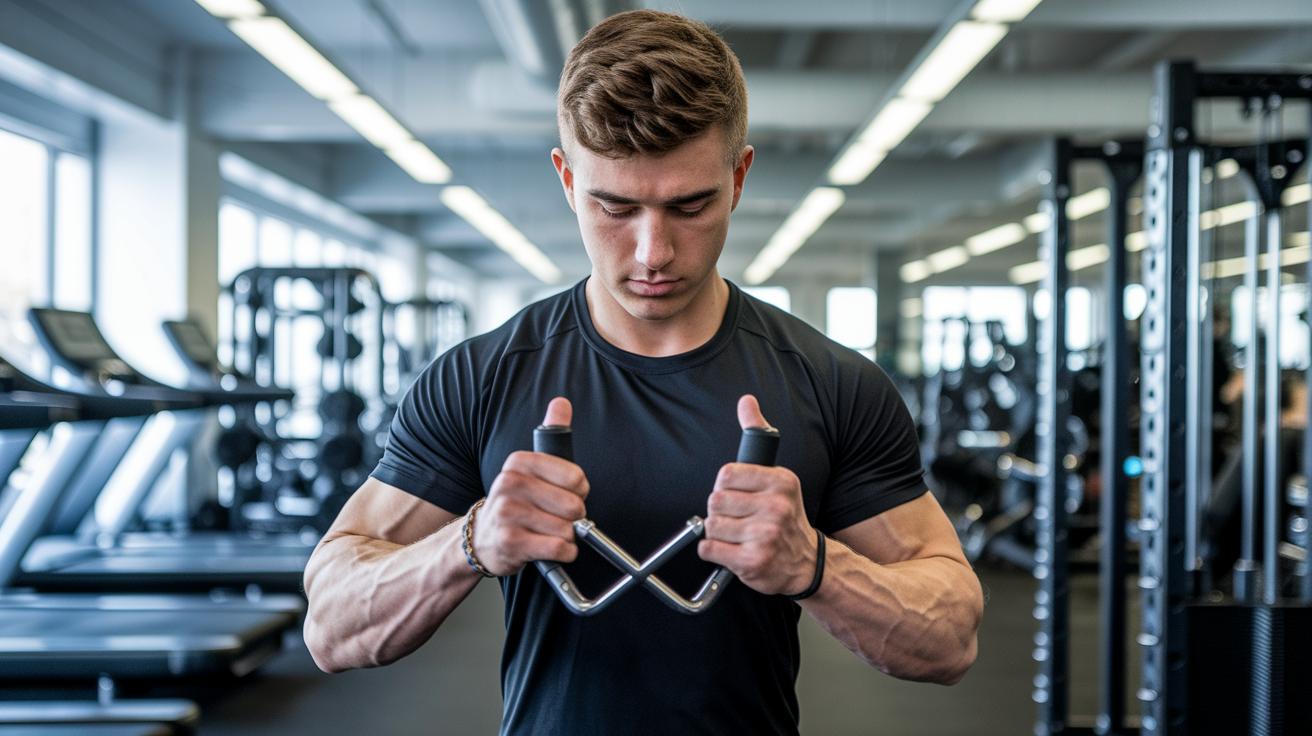
Working out at home can be super effective. All you need is a pair of dumbbells, some resistance bands, or you can even try bodyweight curls. If you're just starting out, have a look at these workout routines for beginners at home. They show you how to make the most of simple gear. You can focus on moves like single-arm dumbbell curls or band curls that really push your muscles every time.
The gym, on the other hand, offers a whole range of equipment. Imagine having access to EZ bars, cable stations, preacher benches, and much more. With gym gear, you can enjoy smoother resistance. For instance, switching from home band curls to cable curls puts a constant tension on your biceps, making each rep feel extra intense. Picture yourself performing a classic barbell curl with your elbows tucked in, so your muscles get a powerful, all-out workout.
A friend once shared, "I switched from dumbbells at home to cable curls in the gym and felt a sharper, more defined contraction every time." Try mixing up your exercises based on what equipment you have, and you’ll be seeing bold arm strength no matter where you train.
Safety, Form, and Recovery Strategies for Bicep Training
When you do bicep exercises, keep your upper arms snug against your sides to protect your shoulders. Think of your elbows like fixed hinges that guide every move. Pick a weight that's challenging enough that the final rep feels really hard, but you can still finish it with good form.
Keep your elbows tight to your sides to stop your front shoulders from taking over. A little bit of a cheat, just a small nudge forward, can be okay if you're trying to break through a plateau. After your workout, spend a few minutes on active recovery, like doing light band curls or a bit of gentle stretching. And remember, don’t work your biceps every day; give them at least 48 hours to rest so they can rebuild strong and steady.
Rest days are just as important as workout days. Treat every session as a stepping stone toward better strength and control. Keep your breathing steady and focus on making each rep smooth and controlled. Always warm up thoroughly and ease into heavier weights gradually. Stay mindful of your form. Keep pushing smartly, and your consistent practice will pay off over time.
Advanced Bicep Workout Routine for Mass and Definition
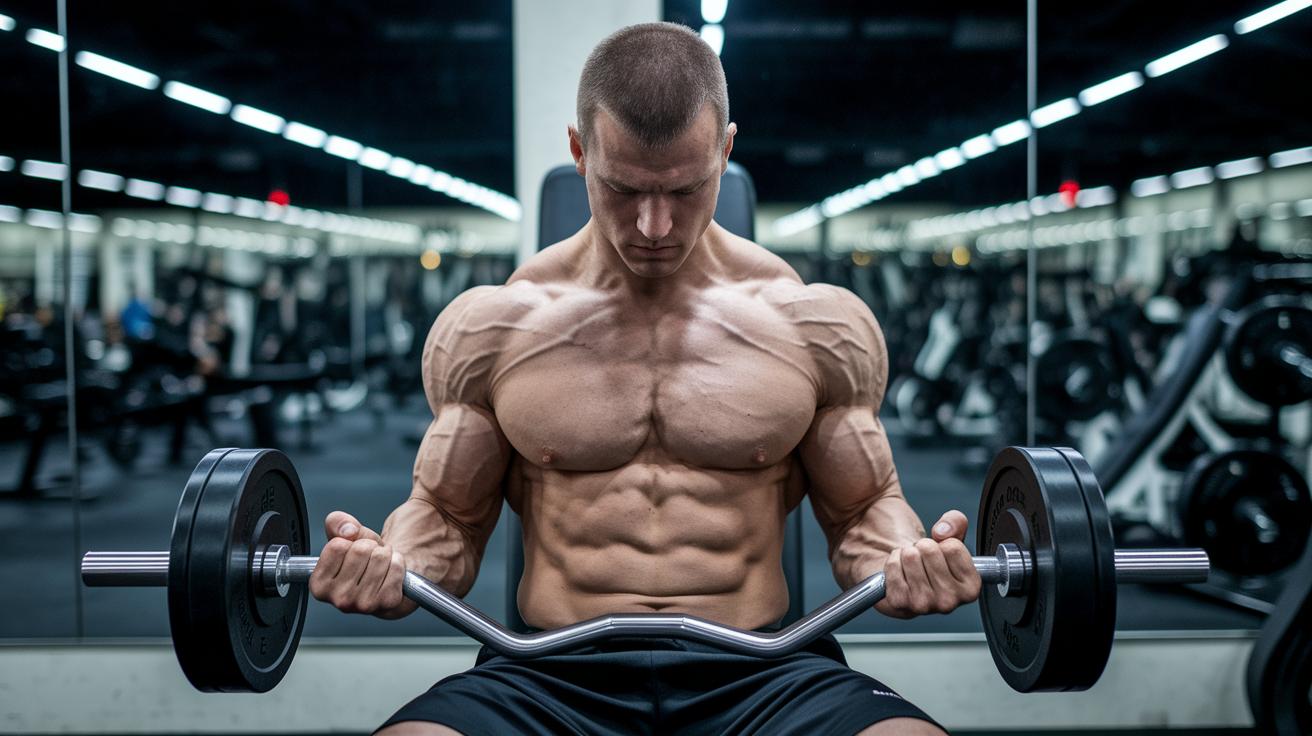
Amp up your arm workout by trying some fresh intensity techniques. Picture this: you start with incline curls and then, without pausing, move right into hammer curls for 3 sets of 10–12 reps each. This method makes your muscles work fast and hard, building serious power. When your arms start to feel the burn, don't stop, just keep the momentum going like you're sprinting to the finish.
Once you wrap up your main sets, switch gears to cable curls with a drop-set. For your last set, lower the weight by 20% two times and push each drop until you simply can’t do another rep. This trick really challenges your muscles and forces them to work in new ways.
If you’re into circuit training, mix it up by doing barbell curls, preacher curls, and concentration curls with only a 30-second break between each move. This keeps your blood pumping and gives you a focused bicep workout that boosts both endurance and muscle growth. And try this: lower each rep slowly over 3 seconds, then pause for 1 second when your muscles flex at their peak. Every movement counts. Experiment with these advanced techniques to bust through plateaus and sculpt arms that truly stand out.
Final Words
In the action, we broke down a structured bicep workout routine, sharing clear steps on choosing exercises, rep schemes, and rest intervals. We walked through form cues and provided progression tips for beginners to advanced athletes. We even compared options for home and gym setups while stressing safe training techniques. This guide offers a practical, trusted method to follow a bicep workout routine that boosts strength and confidence. Keep pushing forward, you’ve got everything you need to build brighter, stronger arms.
FAQ
What’s a good bicep workout routine?
A good bicep workout routine combines compound and isolation moves. It generally includes exercises like barbell curls and hammer curls, performed in sets of 8–12 reps to build strength and muscle efficiently.
Are 4 exercises enough for biceps?
Using 4 well-chosen exercises can effectively target the biceps. Focusing on different movement angles ensures balanced growth, though adding variations later may further enhance muscle development.
How can I train my biceps at home versus at the gym?
Training at home often uses dumbbells, resistance bands, or bodyweight moves, while gym workouts allow access to cables, EZ bars, and preacher benches for a varied and effective routine.
What are 7-7-7 bicep curls?
The 7-7-7 bicep curls involve a slow 7-second lift, a 7-second hold at peak contraction, and a 7-second descent, increasing time under tension to boost muscular endurance and growth.
Is a 50 lbs bicep curl good?
A 50 lbs bicep curl can be effective if it challenges you without compromising form. Your ideal weight depends on your current strength and technique, so adjust as needed for optimal results.
What are Zottman curls and how do they help?
Zottman curls work both biceps and forearms by switching grip positions during the lift. They strengthen the muscles more evenly, making them a valuable addition to your routine.
How do pull-ups, bent-over rows, overhead press, and side lateral raises complement bicep training?
These exercises support bicep strength by targeting surrounding muscles. Pull-ups and rows engage your back, while overhead presses and lateral raises build shoulder stability, leading to a more balanced upper-body workout.
Where can I find a biceps workout plan PDF?
Many fitness websites and health resources offer downloadable biceps workout plan PDFs, providing structured routines and visual guides to help you organize your training sessions effectively.
How should beginners start a biceps workout routine?
Beginners should start with light weights and focus on proper form. Training twice per week with controlled movements sets the foundation, allowing for gradual progression and reduced injury risk.